Project / Immigration Law
Type
Logo, Brand, and Website Design and Development
Industry
Immigration Law
Year
2025
002 / Project Context
Type
Logo, Brand, and Website Design and Development
Industry
Immigration Law
Year
2025
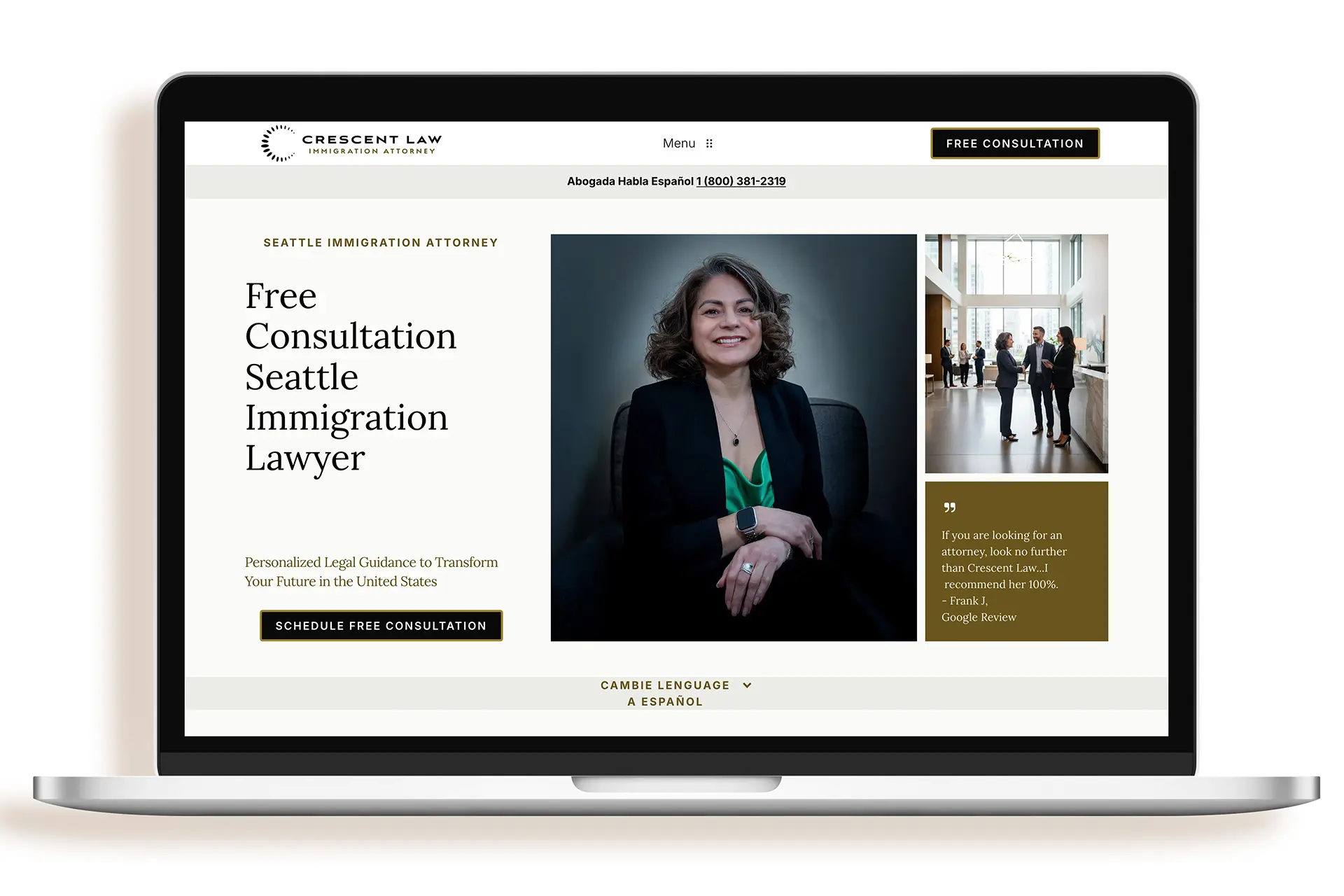
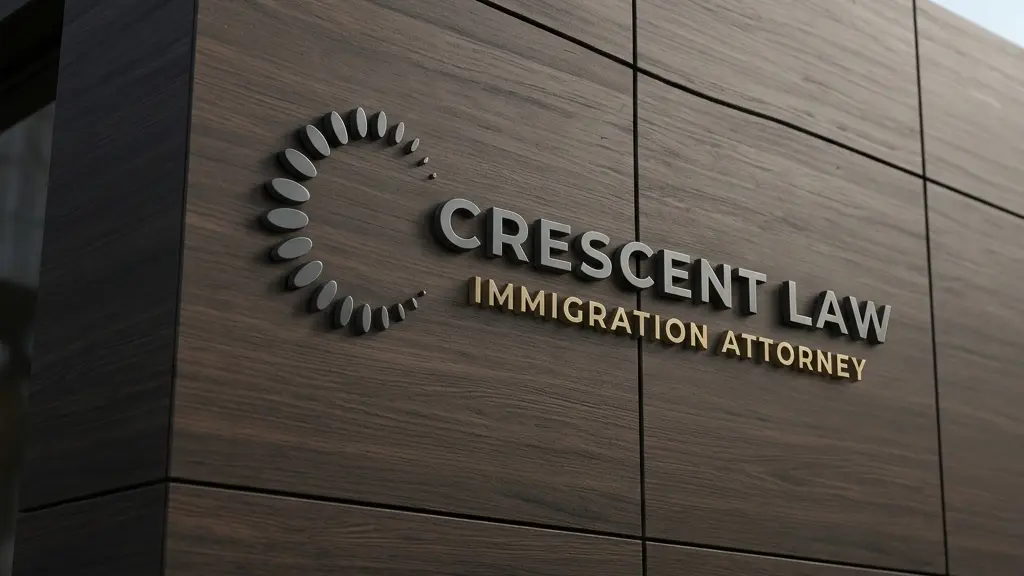
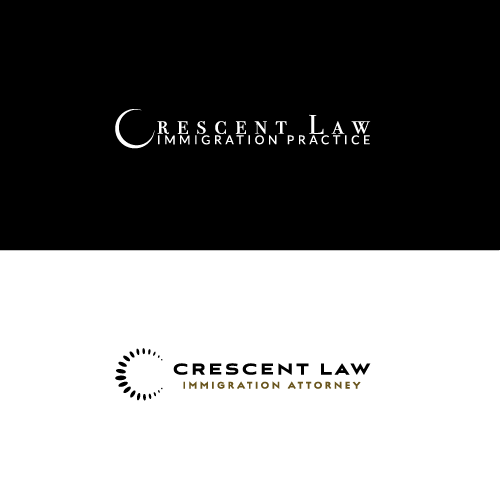
Crescent Law is a growing immigration law firm serving clients navigating the U.S. immigration system. The project began with reimagining the firm's crescent logo into a geometrically refined mark, then expanded into a multi-site digital ecosystem. Crescent-law.com, seattleh1bvisa.com, and bellevueworkvisas.com. Supported by a production governance framework that addresses WSBA compliance, location accuracy, and timing-sensitive intake strategy across all three properties.
003 / Challenge
The Problem
The firm was nearly invisible online in one of the most competitive immigration law markets in the country. The existing website looked like forty other practices in King County. Same stock photography, same generic copy, same logo that could be peeled off and stuck on any firm's letterhead. Potential clients searching for immigration help in Seattle had no reason to choose Crescent Law over anyone else on the page.
004 / Approach
Strategic Direction
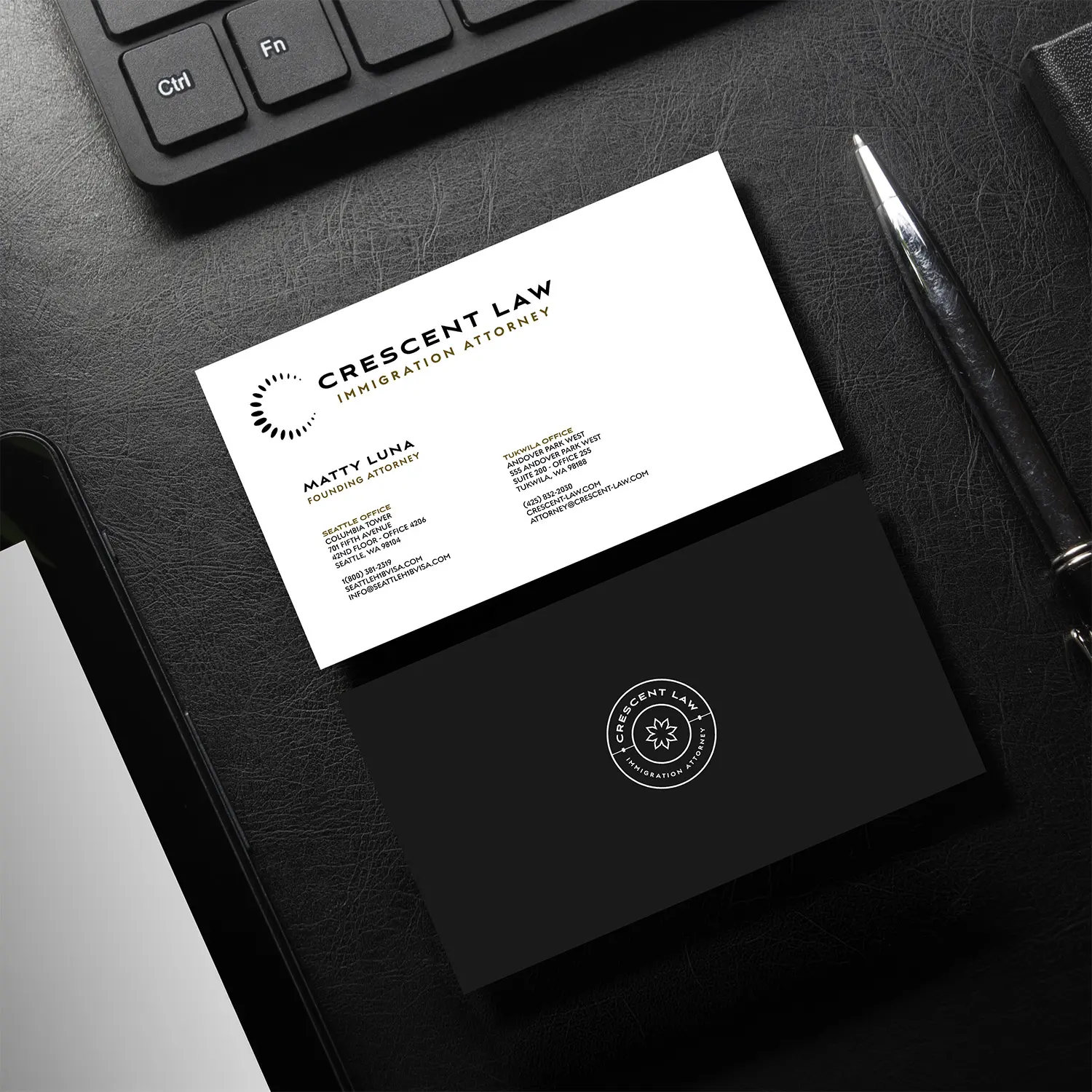
The crescent was redesigned with geometric precision to create a logo that feels both familiar and unexpected. Market analysis identified Special Immigrant Juvenile Status visas as an underserved niche in the Pacific Northwest, positioning Crescent Law as a trusted partner for this case work. The website architecture was built to support immigration-related search queries and a dual-path conversion system serving both employers and individual visa seekers.
005 / Implementation
How It Was Built
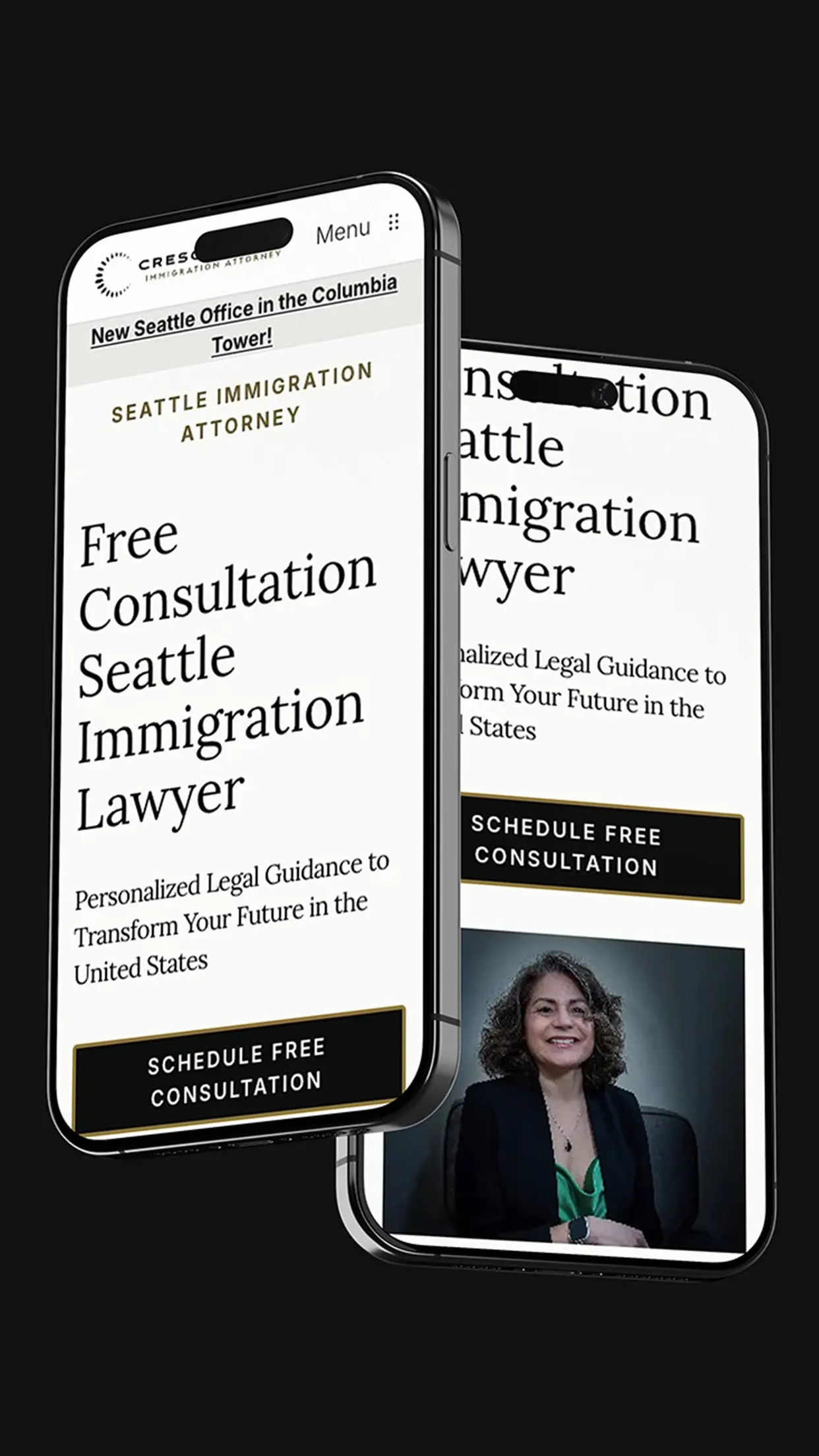
The new logo and brand identity were carried through a website built on Webflow, supporting consultation-driven inquiries, structured legal content, and a stronger mobile user experience. A custom video campaign targeting SIJS services ran on Facebook and Instagram to establish authority in the identified market gap. Semantic SEO foundations were integrated into the content hierarchy from the beginning.
006 / Additional Evidence
007 / Continue
Related Services
If this case study is close to what you are trying to solve, the related service pages explain how the work is scoped before a project begins.
008 / Multi-Site Strategy
Three Domains, One Compliance Framework
Crescent Law operates three websites. crescent-law.com as the primary firm site, seattleh1bvisa.com and bellevueworkvisas.com as practice-specific sites targeting employment-based visa demand in the Seattle-Bellevue tech corridor. Each site speaks to a different audience segment and search intent while operating under a unified compliance and governance framework.
The practice-specific sites are not thin landing pages. Each is built as an independent, fully compliant property. With its own entity disclosures, attorney identification, location statements, and intake disclaimers. Every site satisfies Washington RPC 7.1 through 7.5 independently, because a multi-site strategy that relies on a primary domain for compliance coverage leaves the satellite sites exposed.
The result is a search presence that captures high-intent queries across geographic and practice-area dimensions. Without the compliance gaps that come from building fast and auditing later.
009 / Governance
Compliance as a Design System
I developed a production governance framework for the Crescent Law ecosystem. A structured set of documents that define what is true, what is allowed, and what must be present before any page goes live. The framework covers entity and attorney identification, location accuracy, approved and prohibited language, required disclosures, and launch-gate conditions that must be satisfied before deployment.
Location governance was particularly critical. The firm serves the Bellevue market with a mailing address there, but maintains meeting offices in Seattle and Tukwila. The governance standard defines exactly how each location is represented across every page class. Homepage, footer, contact, and Bellevue-targeted content. So that no page implies an office presence where one does not exist. This distinction matters under Washington's truthfulness rules, and getting it wrong is one of the most common compliance failures in legal web design.
The governance documents also define allowed and prohibited language at the phrase level. Blocking terms that imply false claims while approving alternatives that are both accurate and effective for search. This level of detail is what separates a compliant website from one that passes a casual glance but would not survive a bar inquiry.
010 / Timing Strategy
Seasonal Intelligence Built into the System
Immigration law operates on government-defined timelines. H-1B lottery windows, filing deadlines, grace periods, and processing cycles that change the actionability of every service the firm offers. A static website that promotes consultations year-round regardless of season creates misleading urgency and wastes attorney time on inquiries that cannot be acted on.
I built a timing window governance layer that classifies every service by its current state. Open, time-sensitive, season-limited, or out-of-window. And maps each state to specific CTA rules, intake routing, and disclosure requirements. When a service is not currently actionable, the system redirects visitors to education, waitlists, or alternative pathways instead of booking consultations that lead nowhere. The same season-aware logic shaped a social video campaign that ran during the SIJS filing window without making promises outside it.
The framework is designed to be reusable. The timing classification system, CTA governance rules, and expert-time protection logic can be adapted to any practice with deadline-sensitive or seasonal services. The specifics change. The architecture does not.
The governance and compliance approach described above was developed for Crescent Law's specific operational and jurisdictional circumstances. Every law firm's compliance obligations depend on its individual practice structure, bar admissions, location model, and the states in which it operates. This case study is not legal advice. Firms considering a similar framework should evaluate their own circumstances with qualified counsel before implementation.
011 / Project Record
Scope of Work
- 01Logo refresh
- 02Brand identity refinement
- 03Market gap identification
- 04SIJS service positioning
- 05Social media video production
- 06Multi-site strategy and architecture
- 07Production governance framework
- 08WSBA compliance system
- 09Timing window governance
- 10Search-ready content structure
- 11Consultation conversion design
Results
- 01Distinctive, geometrically refined brand mark
- 02Established SIJS authority in the Pacific Northwest
- 03Three-site ecosystem targeting distinct audience segments
- 04Production governance standard for ongoing compliance
- 05Timing-aware intake and CTA system
- 06Stronger professional digital presence
- 07Improved consultation-oriented user flow
012 / Related Services
Related Services
013 / Get Started
Start a Project
Ready to strengthen your digital presence? Let's discuss how I can help.