Web Design
Green Lake Digital designs credible, search-ready websites for Seattle service businesses that need clearer messaging, stronger proof, better mobile usability, and an easier path to contact.
Best fit: Seattle service businesses, contractors, law firms, consultants, and local companies that need a clearer web presence.
002 / Primary Evidence
Relevant website and brand systems.
These projects show how website structure, brand identity, service positioning, and proof can work together without making claims about lead volume or business outcomes.
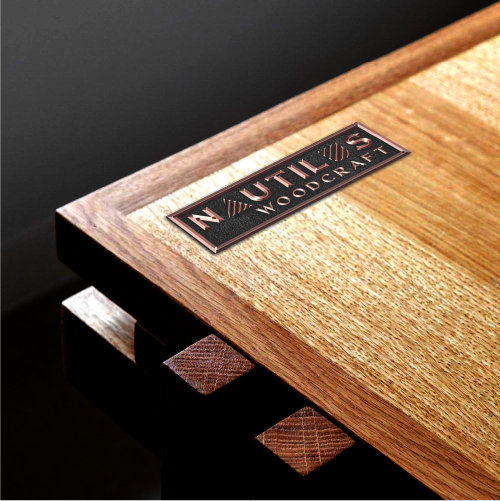
Nautilus Woodcraft is a web and identity system for a woodworking studio that needed a more professional service presentation.
003 / Overview
Web Design Is How Your Brand Becomes a Working Digital Presence
A website should explain what your business offers, who it serves, where it works, and why customers should trust it. Most do not. The site is a templated layout that could belong to any competitor, the copy is vague enough to mean nothing, and visitors leave before understanding what makes the business different.
Green Lake Digital designs websites that bring your brand identity online and structure your services, audience, location, and proof in a way that customers can understand quickly. The same structure that helps a person make a decision also helps search engines and AI-powered results recognize what the business does and who it serves.
That is the system: a logo gives the business a recognizable mark. Brand design turns that mark into a consistent visual language. The website brings that identity online. Clear website structure makes the business easier to find through traditional search, AI answer engines, and the generative results pulling from the same web content. A polished layout is not enough on its own. The site has to work as part of how the business shows up online.
004 / What the Website Must Accomplish
The decisions that make a website useful.
Brand alignment, a clear path to contact, technical clarity, and business context work together. Each principle remains readable in the list and can be explored in detail.
01 / How Branding Informs Web Design Decisions
Your logo, color palette, typography, and messaging are the recognizable shorthand for the business. When the website carries those elements consistently, visitors form a coherent impression. When it does not, the site reads as disconnected from the business it represents.
Consistent brand application across the website builds recognition and trust. Visitors decide whether a business is credible within seconds, and that decision is shaped by visual coherence, not isolated elements. A logo that contradicts the typography, or colors that shift between pages, erodes credibility before a word is read.
Green Lake Digital designs systems, not pages. Every component, the headers, the cards, the CTAs, the footers, is built from the same brand vocabulary so the entire site feels unified and intentional. The website becomes the working version of the brand, not a separate template wearing the brand's colors.
005 / Includes
What a Web Design Engagement Includes
The work covers the pieces that make a website useful: page strategy, search intent, content structure, visual design, responsive development, metadata, schema where it reflects visible content, analytics events, and a launch checklist.
For Seattle small businesses, that usually means service pages that explain the offer plainly, proof that appears before the contact point, mobile layouts that are easy to use, and internal links that connect related services such as brand design and logo design.
The goal is not to make a larger site than you need. It is to build a website where every important page has a job, a clear audience, and a next step.
006 / Philosophy
Brand-Aligned Web Design, Not Decorated Templates
A website without brand strategy reads as decoration. A polished layout sits on top of vague messaging, generic stock photography, and copy that could describe any competitor in the same industry. The site looks fine. The business stays invisible.
Green Lake Digital approaches every Seattle web design project from the brand outward. When your brand design is clear, every page on the website has a job. The hierarchy communicates priority. The whitespace creates focus. The typography carries tone. The website becomes a working version of the brand, not a separate template wearing the brand's colors.
The goal is a site that turns your brand into a working digital presence. Every section earns its place. Every link supports the story you are telling about the business. Nothing is arbitrary.
007 / Process
Clarify, Design, Build, Launch
01
Clarify
Define the audience, offer, market position, search intent, and conversion path before design decisions are made.
02
Design
Build the visual system, page structure, content hierarchy, and interaction patterns around that strategy.
03
Build
Develop the site with clean routes, semantic markup, responsive layouts, analytics events, and search-ready metadata.
04
Launch
Prepare the handoff, confirm redirects and indexable URLs, test the contact flow, and document what to monitor after launch.
008 / Process
How a Project Comes Together
Every project follows the same arc: discovery, strategy, design, development, and launch. Discovery is where the business gets understood. The competitive landscape, the audience, the goals. Strategy translates that into a site architecture and content plan organized around your services, audience, location, and proof. Design builds the visual system from your brand. Development brings it online.
The technical stack is chosen to serve the work, not the other way around. Most projects are built as static-generated sites for speed, security, and predictable performance. For clients who need to manage content themselves without developer involvement, Webflow is the alternative. The platform recommendation always follows the strategy.
The point is not the framework. It is the site that comes out of it: clear, credible, easy for customers to use, and structured so search engines and AI answer engines can read it the same way a person would.
If you are evaluating designers, this guide on choosing a web designer in Seattle covers the process, the red flags, and the questions worth asking before signing anything. For the structural principles behind effective small business sites, web design best practices for small businesses is the reference.
009 / Results
What a Brand-Aligned Website Produces
The businesses that reach out tend to share the same problem: they have outgrown their current website. The design no longer reflects the quality of the work. The site does not show up in search. Visitors leave without taking action. The brand feels inconsistent across touchpoints.
A brand-aligned website changes that trajectory. It positions the business accurately, communicates value clearly, and creates a digital experience that matches the quality of the service. Paired with brand identity and the broader services, the website becomes the center of a system that builds visibility and trust over time.
Green Lake Digital has built websites for law firms, consultancies, contractors, creative studios, wellness practices, and product businesses across the Seattle area. Each project is different, but the principle is the same: design with intention, build with precision, launch with confidence. Examples are in the portfolio.
011 / Project Proof
Project evidence behind the approach.
- 01
Nautilus Woodcraft
Naming, logo design, positioning, messaging, and website design for a woodworking studio that needed a more professional company presentation. The Nautilus Woodcraft project connected naming, logo design, brand positioning, messaging, and a custom website for a woodworking studio that needed to look as intentional as the work it builds.
- 02
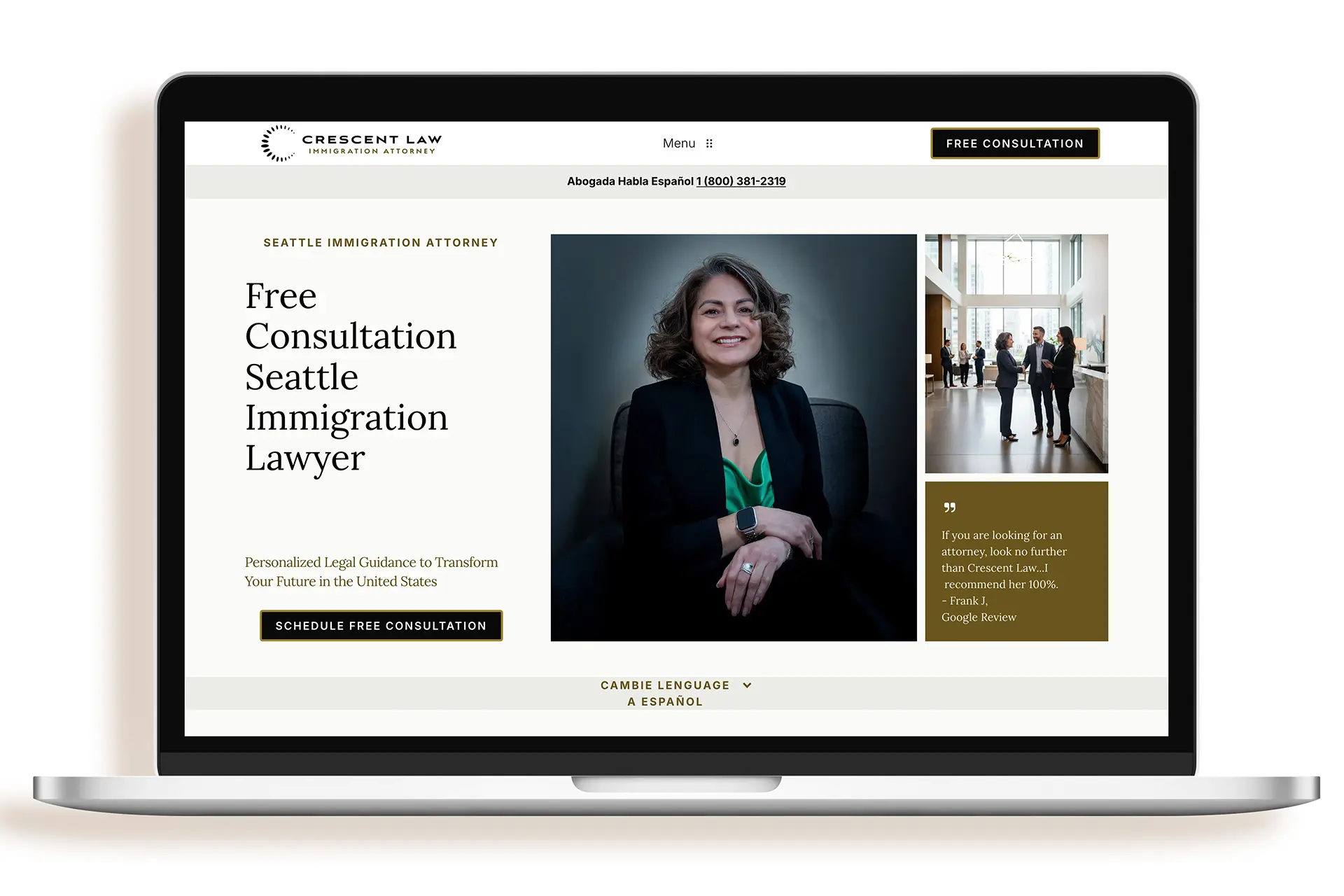
Crescent Law
A legal brand and website ecosystem with compliance-aware content structure and attorney-reviewed intake paths. The Crescent Law work required a legal brand and multi-site website structure with WSBA compliance, attorney-reviewed content, and intake paths that respected the limits of legal marketing.
- 03
Bellevue Landscaping
A service-business site planned around location relevance, buyer intent, photography, and clear inquiry paths. The Bellevue Landscaping property shows how service pages, location relevance, buyer intent, and conversion paths can be planned before the design layer is built.
012 / Fit
Who This Web Design Service Is For
This service is for small businesses, professional service firms, contractors, and legal practices that need a custom website tied to a real business problem: unclear positioning, weak search structure, poor mobile experience, missing proof, or a site that no longer reflects the quality of the work.
It is not a fit for businesses that only need a cheap template installed, a design refresh with no content work, or traffic promises no designer can honestly control. The work is strategy, design, content structure, development, analytics, and launch support in one build.
Clients work directly with Fabian Luna. The website, accounts, deployment, and reporting remain client-owned, with handoff and ongoing support scoped to the engagement.
013 / Seattle
Web Design for Seattle's Competitive Market
Seattle's business environment is one of the most digitally sophisticated in the country. From tech-adjacent startups in South Lake Union to established law firms Downtown, contractors on the Eastside, wellness practices in Capitol Hill, and creative studios across Fremont and Ballard. Every industry here has competitors with professional websites. The baseline is higher than most markets, which means a generic template site is a competitive disadvantage.
I have designed and built websites for Seattle businesses across professional services, legal, creative, construction, health and wellness, and hospitality industries. Each project required understanding the specific expectations of that industry's audience and the competitive landscape they operate within. A website for a consultancy serves a fundamentally different purpose than one for a consumer brand. And the design should reflect that.
Whether you serve the greater Seattle metro area, the Puget Sound region, or clients nationwide, the website I build is structured to perform in the markets that matter most to your business.
014 / Guidance
When Your Seattle Business Needs a Website Redesign
Most Seattle businesses do not need a new website. They need their current one to actually work. A website redesign is not about chasing trends or refreshing aesthetics for the sake of it. It is about fixing the structural and strategic issues that prevent the site from generating leads, ranking in search, or communicating credibility.
Common signs include declining organic traffic, high bounce rates, a design that no longer reflects the quality of your work, poor mobile experience, slow load times, or a site that requires explanation rather than communicating on its own. If potential clients visit your website and leave without understanding what you do, the problem is structural. Not cosmetic.
I approach redesign projects with the same strategic rigor as new builds. The process begins with an audit of what is and is not working, followed by a clear plan that addresses the specific gaps. A redesign grounded in brand strategy gives the site a clearer foundation, rather than another surface refresh you will need to replace in two years. Schedule a consultation to evaluate your current site.
016 / Related Services
Logo, Brand, Website. The Same System.
A logo gives the business a recognizable mark. If yours needs to come first, logo design in Seattle is available as a focused project or bundled with brand and web design for a cohesive launch.
Brand design turns that mark into a consistent visual language. If your brand identity needs definition before web design begins, brand design in Seattle covers positioning, messaging, visual identity, and guidelines, as a standalone service or as part of an integrated engagement.
Once the website is live, the structure carries forward. Services, audience, location, and proof are organized so the site supports search systems that read websites by meaning, context, and trust. For the underlying search model, read the semantic SEO guide. View all services, or explore the portfolio to see how logo, brand, and website come together.
017 / FAQ
Web Design Seattle. FAQ
01
How do you approach search visibility in web design?
Search visibility is structural. Every website is organized around the things that help both people and search systems understand the business: clear services, the audience you serve, the locations you work in, and proof of the work. That structure shows up in semantic HTML, heading hierarchy, internal links, metadata, structured data, and the way each page connects to the rest of the site. Paired with strong page speed and Core Web Vitals, the site has a foundation that supports traditional Google search, AI answer engines like ChatGPT and Gemini, and the generative search results that pull from the same web content. Without that foundation, even a polished design tends to underperform in search.
02
What platform do you build websites on?
I build primarily with Next.js, TypeScript, and Tailwind CSS using a static-site generation (SSG) first architecture. This stack produces fast, accessible, SEO-ready websites that score well on Core Web Vitals. For clients who need to manage content independently without a developer, I also design and build on Webflow. The platform recommendation depends on your team, your budget, and how you plan to maintain the site long-term.
03
How long does it take to build a website?
A typical web design and development project takes six to ten weeks from kickoff to launch. Brand identity work, if needed, adds two to four weeks at the front end. The timeline depends on the number of pages, the complexity of the layout system, and how quickly content and feedback are provided. I set clear milestones at the start so both sides know what to expect.
04
Do I need branding before web design?
Not necessarily, but it helps. A website built without clear brand positioning tends to look generic and communicate poorly. If you already have a strong brand identity, I design directly from that foundation. If you do not, I offer brand identity as a standalone service or as part of a combined engagement. Starting with brand strategy before web design produces a more cohesive, effective result.
05
What makes a good business website?
A good business website communicates what you do, who you serve, where you work, and why customers should trust you, all within seconds. It loads fast, works on every device, reflects your brand consistently, and guides visitors toward a specific next step. The same clarity that helps a person understand the business also helps search engines and AI-powered results recognize what your business does and who it serves. The difference between a website that earns inquiries and one that sits idle is almost always clarity of message, quality of design, and intentional structure.
06
How much does web design cost in Seattle?
Web design pricing in Seattle typically ranges from $4,000 to $20,000+ depending on the scope, number of pages, and whether brand identity work is included. A focused landing page or small business site with five to eight pages generally falls in the $4,000-$8,000 range. Multi-page projects with custom layout systems, CMS integration, or combined brand and web engagements run higher. I provide a detailed scope and fixed-price quote before any work begins. There are no hourly billing surprises.
07
Do you design websites for contractors and law firms in Seattle?
Yes. Law firms, contractors, and professional service businesses are the clients I work with most. These industries share a specific challenge: the quality of the work is high, but the website does not reflect it. For attorneys, I focus on compliance-aware structure and attorney-reviewed language. For contractors, I focus on local search architecture, project photography, and service-area clarity. The approach is tailored to the industry and the competitive market each client operates in.
018 / Get Started
Start a Project
Ready to strengthen your digital presence? Let's discuss how I can help.