
Project / Landscaping / Design-Build
Type
Brand Identity, Website Design, and Semantic SEO Architecture
Industry
Landscaping / Design-Build
Year
2026

002 / Project Context
Type
Brand Identity, Website Design, and Semantic SEO Architecture
Industry
Landscaping / Design-Build
Year
2026
Bellevue Landscaping was a wholly owned affiliate website built to demonstrate how research-driven strategy, semantic SEO architecture, and a deliberate visual identity can position a landscaping business in one of the most affluent residential markets in the Pacific Northwest.
This is a historical project record. The underlying site is scheduled for retirement in early 2027, and this case study describes the work as it was designed and built, not a current commercial offer.
003 / Challenge
The Problem
The Seattle Eastside landscaping market is saturated with businesses that look interchangeable online. Dozens of contractors use the same stock photography, the same vague service descriptions, and the same template layouts. The sites that ranked did so on domain age and review volume, not on content quality or search architecture. Building a new property that could compete meant solving a positioning problem before writing a single line of code.
004 / Approach
Strategic Direction
Strategy began with research executed before any design work started. Competitive analysis identified positioning gaps in the Eastside market. A buyer segment model defined distinct homeowner profiles with different trust requirements and decision triggers. A geo-priority framework classified service-area cities by market potential and competitive density. These research deliverables became the foundation for every content, design, and architecture decision that followed.
005 / Implementation
How It Was Built
The site was built on Next.js with TypeScript, Tailwind CSS, and a static-first architecture. Content architecture was organized around service-intent and location-intent page structures, with structured data, geographic signals, and semantic content hierarchy built into every template from the first commit.
006 / Additional Evidence



007 / Research
Research Before Design
Most landscaping websites start with a template and a logo. This one started with research. Competitive analysis mapped the Eastside market. Buyer segment modeling defined who the site needed to speak to and how. Geographic priority mapping determined which cities to build pages for and in what order. Every design and architecture decision traced back to a finding in those research documents.
008 / Visual Identity
Why the Palette Feels Like a Place
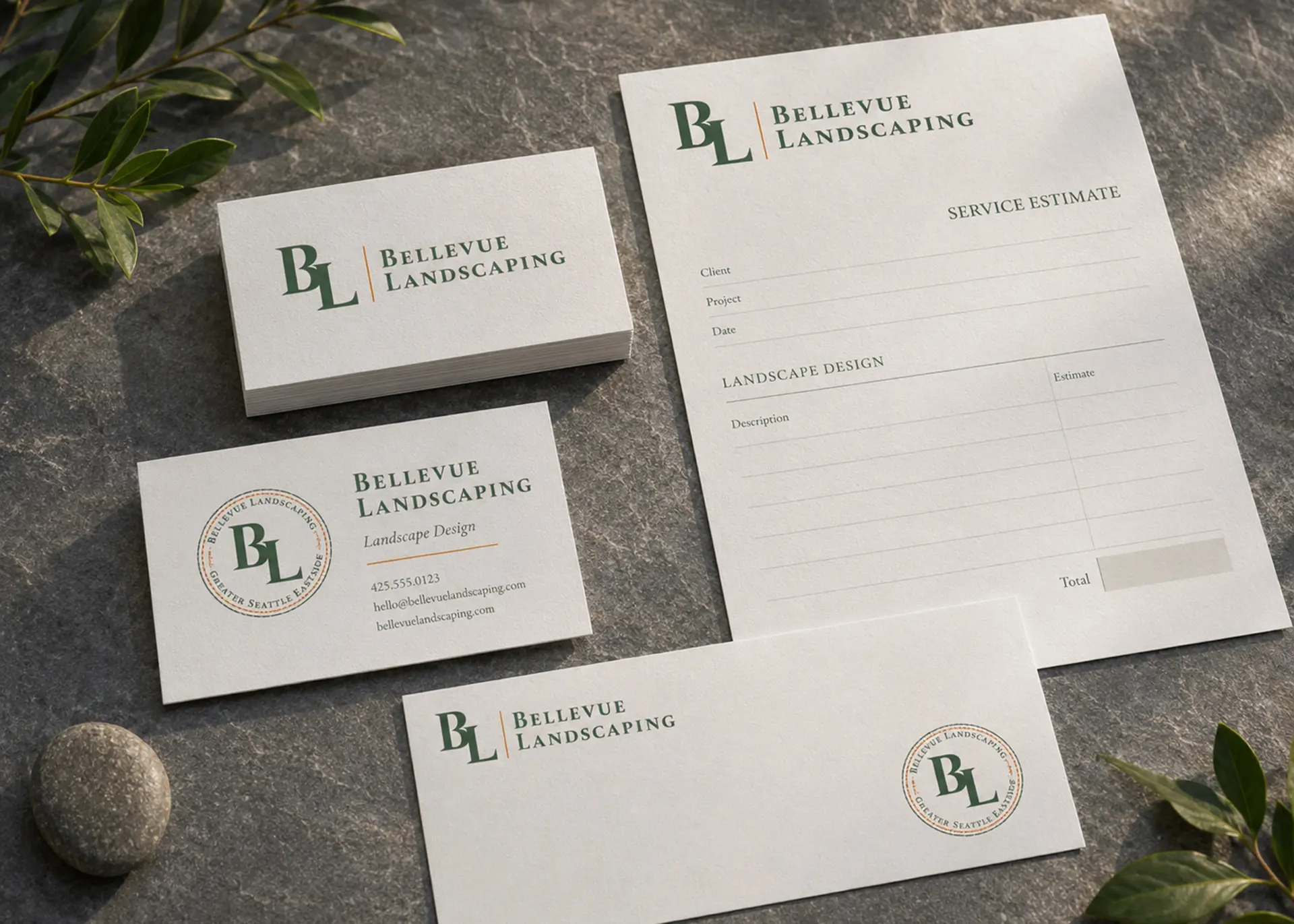
The brand palette was derived from buyer research, not a trend board. Earth tones that communicate luxury through restraint: forest greens, warm ivories, and copper accents that reference the natural environment without mimicking it. The typography followed the same logic. A serif display face for headings, a clean sans-serif for the utility layer. Each typeface had a defined role, none decorative.
009 / SEO Architecture
Content Built for How Search Actually Works
Semantic SEO is not keyword stuffing with better vocabulary. It is building a content structure that tells Google what the site is about at the entity level, not just the page level. The architecture was built around topic clusters: groups of related pages that shared internal links, structured data relationships, and semantic context, so that Google could treat the site as an authority on a subject rather than a collection of disconnected pages.
010 / Continue
Related Services
If this case study is close to what you are trying to solve, the related service pages explain how the work is scoped before a project begins.
011 / Project Record
Scope of Work
- 01Competitive analysis
- 02Buyer segment modeling
- 03Geographic priority mapping
- 04Brand identity and visual direction
- 05Color theory and palette development
- 06Typography system design
- 07Semantic SEO content architecture
- 08Website design and development
- 09Service-area page structure
- 10Conversion path design
What Was Delivered
- 01Research-backed positioning in a saturated market
- 02Geographic targeting across Eastside cities
- 03Buyer-aligned content and conversion paths
- 04Earth-tone visual identity designed around WCAG AA contrast targets
- 05Semantic SEO content architecture
- 06A fully built affiliate lead-generation site
These describe what was delivered at the time the site was built, not independently measured performance. No traffic, lead-volume, ranking, or revenue figures are claimed here.
012 / Related Services
Related Services
013 / Get Started
Start a Project
Ready to strengthen your digital presence? Let's discuss how I can help.