The Memo
What USCIS Changed
USCIS has issued policy guidance that may significantly affect how green card applicants pursue adjustment of status from inside the United States. The memo describes adjustment as a discretionary benefit and emphasizes consular processing abroad as the ordinary immigrant visa pathway when available. For immigration attorneys, the immediate issue is not just legal interpretation. It is also client communication.
Search Behavior
Policy Changes Move Through Google Before They Move Through Casework
When federal immigration policy shifts, search behavior changes faster than legal interpretation. Prospective clients start looking for answers before they understand the legal categories involved. They search short, urgent phrases: “Do I have to leave the U.S. to get a green card?” “Can I still adjust status in the United States?” “New USCIS green card rule.” “Will my pending I-485 be affected?” “Do H-1B workers need to leave to get a green card?”
The firms that answer those questions clearly, carefully, and early are more likely to earn attention before the market becomes saturated with panic-driven content.
This is the search angle that immigration attorneys need to take seriously. The same shift in how search engines and AI answer engines read websites means a page that helps a client understand the issue also helps the firm get surfaced when the question gets asked.
Client Confidence
The Question Clients Are Asking First
Immigration clients are already navigating fear, uncertainty, and fragmented information. A USCIS memo that appears to change expectations around adjustment of status can intensify that anxiety quickly, especially for people who are already inside the United States waiting for a family-based, employment-based, or humanitarian green card pathway.
The legal details will need to be interpreted carefully. The public-facing concern is much simpler: will a client have to leave the United States to finish a green card case?
That question has commercial implications for immigration law firms. If a firm's website, intake process, ads, and consultation language are still written for the prior environment, potential clients may not see the firm as current, responsive, or prepared. Even if the attorney is fully aware of the policy shift, the firm's digital presence may not communicate that awareness. That gap can cost trust.
Marketing Implications
Possible Implications for Immigration Law Firm Marketing
The USCIS memo may affect more than pending cases. It may affect how prospective clients evaluate immigration attorneys online. A person who is worried about adjustment of status will not begin by reading a full legal analysis. They will usually begin with a short, urgent search. If the first page they find does not address the new concern, they may assume the firm is behind.
Green Card Pages May Become Outdated Faster
Pages about adjustment of status, marriage green cards, family petitions, employment green cards, PERM, EB-2, EB-3, H-1B to green card, and consular processing may need stronger context around uncertainty, discretion, and case-specific review.
This does not mean firms should rush to make absolute claims. It means existing content may need to reflect that adjustment of status is facing new scrutiny and that applicants may have more questions about whether consular processing is required. Even a single paragraph acknowledging the shift, paired with a clear consultation path, can change how a page reads to a worried visitor.
Intake Demand May Shift Toward Risk Screening
If more applicants are worried about whether they can remain in the United States while pursuing a green card, consultation demand may shift toward risk evaluation rather than case filing.
Prospects may not know how to describe their issue correctly. They may use broad language like “green card rule,” “self deport,” “leave the country,” or “new USCIS law.” Immigration law firms that rely only on narrow legal terminology in their site copy and intake forms may miss that demand entirely. A short bridge between plain-language search terms and the right consultation page is often more valuable than another generic practice-area page.
Paid Search Campaigns May Need to Account for New Query Patterns
Search terms around adjustment of status, green card from inside the U.S., consular processing, Form I-485, and USCIS green card changes may become more competitive.
The challenge is that these searches will include a mix of highly qualified prospects, confused searchers, and people looking for general news. Without careful strategy, firms may spend on traffic that does not convert, or publish content that attracts concern without building trust. Negative keyword discipline, targeted landing pages, and audience-aware ad copy matter more in policy-driven moments than in normal cycles.
Client Education Content May Become a Competitive Advantage
When policy is unclear, the public looks for calm interpretation. Law firms that publish measured, accurate, and timely content can create a stronger trust signal than firms that wait until every downstream detail is settled.
The opportunity is not to exploit fear. The opportunity is to become the clear voice in a confusing moment. A short FAQ, a plain-language summary of the official USCIS Policy Manual update, and a consultation page that addresses real client concerns can do more for visibility than a backlog of generic blog posts.
Why It Matters
Why Immigration Attorneys Should Not Ignore the Search Side of This Change
USCIS policy changes do not stay inside legal databases. They move into Google Search, AI Overviews, Reddit threads, YouTube videos, WhatsApp messages, Facebook groups, and local community conversations. Immigration law firms are not only competing with other attorneys. They are competing with misinformation, partial explanations, and oversimplified headlines.
Recent national coverage summarized the policy shift in direct terms, stating that a foreign national temporarily in the United States who wants a green card may be expected to return to their home country to apply. Whether future guidance narrows, clarifies, limits, or expands that interpretation, the public-facing concern is already active.
For law firms, that creates a strategic question: will the firm's digital presence help clients understand the issue, or will it leave them searching elsewhere? The structural answer is the same one that AI search is already proving. The site that explains the situation clearly is the site that gets cited.
The Lane
The Risk of Saying Too Much or Too Little
Immigration law firm marketing has a narrow lane.
Say too much, and the firm risks overstating the policy, creating unnecessary fear, or implying outcomes that depend on individual facts. Say too little, and the firm may look unaware of a major development affecting green card applicants.
The right approach requires legal sensitivity, search judgment, and client-facing clarity. This is especially important for firms serving immigrants from Mexico, Central America, South America, India, China, the Philippines, and other communities where family-based and employment-based immigration concerns overlap with urgent questions about status, travel, consular interviews, inadmissibility, and pending applications. Firms serving work visa populations face the same challenge with a different vocabulary.
Timing
The Firms That Prepare Early Will Have an Advantage
Policy shifts often expose the difference between a website that exists and a website that works.
A working immigration law firm website should help the firm respond when search demand changes. It should support client intake, clarify complex topics, strengthen trust, and position the attorney as current without creating unnecessary alarm. That is the same standard that applies to any service business under pressure: clear structure, accurate content, and a path to the next step that does not require the visitor to figure out the firm's own internal vocabulary.
The firms that wait may find themselves reacting after competitors have already captured the conversation. The firms that prepare early can shape the conversation with accuracy, restraint, and authority.
How Green Lake Digital Helps
Strategy for Immigration Firms Adapting to Policy-Driven Search Demand
Green Lake Digital works with immigration law firms that need more than generic marketing. The work translates complex legal developments into clear digital strategy, search-aligned content, and client-facing communication that reflects how people actually look for help. The latest USCIS adjustment of status memo may become a major turning point for green card-related search behavior. It may reshape what clients ask, how they evaluate attorneys, and which firms they trust first.
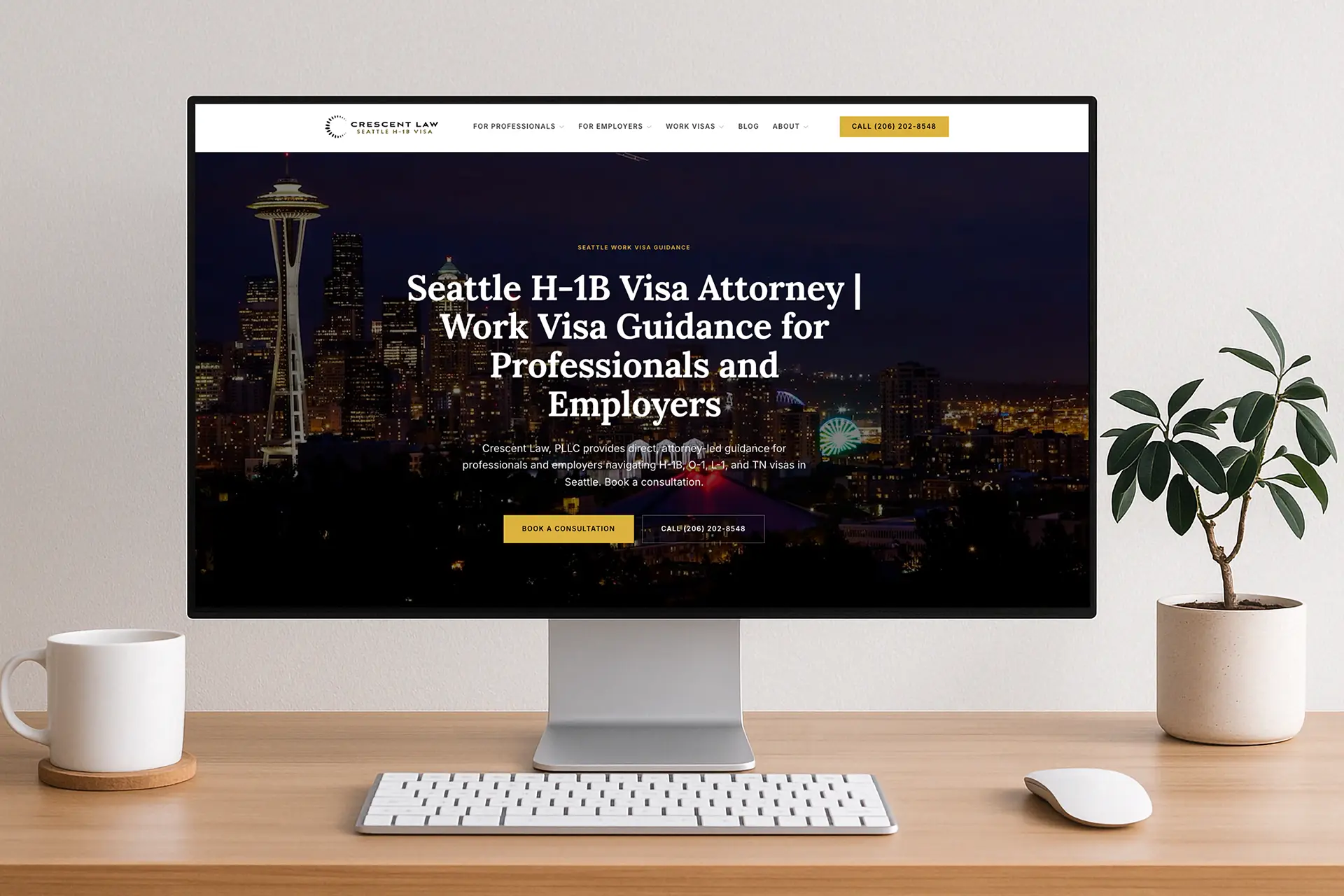
Immigration attorneys do not need panic-driven marketing. They need a strategy that understands legal nuance, search behavior, and the speed at which client concerns change. The same logic applies to the firm's main website.
When immigration policy changes, the firms that communicate clearly are the firms most likely to be found, trusted, and contacted.
Reach out to Green Lake Digital to talk through how your firm's digital presence can adapt to the next phase of policy-driven search demand.
Questions
Frequently Asked Questions
What changed in the recent USCIS green card policy memo?
USCIS issued guidance describing adjustment of status, the process of obtaining a green card from inside the United States, as a discretionary benefit and emphasizing consular processing abroad as the ordinary immigrant visa pathway when available. The practical effect varies by case category and individual facts, but the public-facing concern for many applicants is whether they will need to leave the United States to complete a green card case.
Why does USCIS policy change affect immigration law firm marketing?
When federal immigration policy shifts, search behavior changes faster than legal interpretation. Prospective clients start asking short, urgent questions before they understand the legal categories involved. Immigration law firms whose websites, intake pages, and consultation flows are still written for the prior environment risk looking out of date, even when the attorney is fully aware of the change.
What should an immigration law firm change first?
Start with the pages that directly cover green card pathways: adjustment of status, marriage green cards, family petitions, employment green cards, PERM, EB-2, EB-3, H-1B to green card, and consular processing. Add measured language acknowledging that the policy environment has shifted and that individual cases require legal review. Update intake forms and consultation pages so anxious searchers are routed to screening, not to a static FAQ.
Should attorneys try to rank for panic queries like 'self deport' or 'new USCIS rule'?
Carefully. Panic queries attract a mix of qualified prospects, confused searchers, and news-driven traffic. Content that answers the question calmly, without overstating the policy, can build trust and earn consultations. Content that exploits fear tends to underperform and may create professional responsibility concerns. The goal is clarity, not virality.